Charlotte's Wedge and Crescent

Hi welcome to a new episode of Where We’ve Been, a Charlotte Story. Today I’d like to spend some time exploring the Wedge and Crescent. No, that’s not some type of pastry found at your neighborhood coffee shop. Rather, Wedge and Crescent is an interesting feature of demographics and economics found within Charlotte proper. Its formation and existence is one mired in a long history of racial segregation and redlining.

Being a city of the south, Charlotte has been one to stick to the tradition of finding ways to screw with the black residents in the city during the Jim Crow era. (less than 50 years ago). One peculiarity left over from this time is the two starkly different areas that are the subject of today’s episode. If you overlay a map of the city’s wealth distribution with the racial makeup, you’ll see why it is called the Wedge and Crescent.

First the Wedge. This neighborhood stretches from the southeast of Uptown all the way to 485 and wedged (see what I did there) in between South Blvd and Monroe Road. The most notable thing about this cluster of neighborhoods is that they are mostly white, and the average income and property values are well above Charlotte’s more diverse communities. Here, you’ll find the highest concentration of wealth in the city. In neighborhoods like Myers Park, Dilworth, and Quail Hallow, you’ll find multi-million dollar homes and incomes greater than 90,000 dollars.

In general, residents in the Wedge have better access to transit, public amenities, and education opportunities.

“On the other side of the coin”, but more accurately, the highway, you have the Crescent. This large cluster of neighborhoods is defined by its crescent shape to the north and west of Charlotte’s core. For the most part, the Crescent is almost the opposite of the Wedge. Its population is mostly Black and persons of color, and economically depressed when compared to the thriving core that the Wedge is a part of. Neighborhoods like Windsor Park, Derita/Statesville, and those along the West Blvd. Corridor have historically seen less attention than those found in the Wedge.

During the Jim crow era, Charlotte aggressively packed Black residents into neighborhoods to the west. Over decades of systemic discrimination and red-lining, physical barriers such as highways, cropped up to destroy and/or separate Black neighborhoods throughout the city’s core from “white neighborhoods”.

While the areas closer to uptown are quickly becoming gentrified, the neighborhoods further out in the Crescent have continued to see less opportunities. Unlike the Wedge where money is more available, incomes in the Crescent have remained stagnant and jobs and quality education harder to find. In the past few years, there has been a push for racial justice and economic equity to repair what centuries of racism and discrimination have caused. The success of which is still to be seen.


Opportunity zones are creating opportunity — for Charlotte's rich - Axios Charlotte


One peculiarity of Charlotte’s wealth neighborhoods overlaying with the city’s racial makeup reveals a stark difference between those who have and those who do not.

Where We’ve Been introduces the Wedge and Crescent. Also known as the Arc and Wedge, this peculiar feature of Charlotte is the centerpiece of what economic mobility looks like in the Queen City. For a city of banks and lots of capital, your life and opportunities heavily depend on you zip code, and more accurately, which side of the road you hail from.

Subscribe and listen to Where We’ve Been on your favorite podcast app!

In the Valley - The Tale of Charlotte's Hidden Valley

Introduction:

Nestled between North Tryon Street and I-85 is one of Charlotte’s most infamous neighborhoods. While that is not the most accurate way to describe the neighborhood today, Hidden Valley’s recent past still hangs over the community. When development beginning in 1959, Hidden Valley was initially intended to house white middle class families. But with the destruction of neighborhoods like Brooklyn and the construction of freeways around Uptown carving up communities, many of Charlotte’s Blacks found refuge across the city. However, due to racism and lies, the influx of Black residents led to large swaths of the neighborhood’s white residents to move away; causing the city to ignore and neglect the neighborhood for decades. This neglect left Hidden Valley with a nationally bad reputation. But in recent years, things may be changing. With the completion of the Blue Line extension and the hard work of the Hidden Valley Community Association, the area surrounding Hidden Valley has seen more economic activity, development, and attention. But with all this happening, will Hidden Valley be able to maintain its identity, or will it change and gentrify like Southend? Or can Charlotte learn from its past? Stick around and while we explore Hidden Valley! With special guest, Frederick Murphy.


The Beginning of Hidden Valley:

With the growing national popularity of suburbs in the States, Hidden Valley was created in 1959 initially as a white middle class neighborhood. Developed and built in 1960 by George S. Goodyear as one of the largest subdivisions in the city. A fifteen-minute drive from uptown Charlotte, Hidden Valley contains over 4000 houses and is lined with streets named after characters from old European folktales. The neighborhood was planned to be wedged between Tom Hunter Road to the East, Sugar creek road to the West, Reagan Drive to the North, and Tryon St. to the south. One prime example is that the neighborhood’s middle school is off of Snow White Lane.


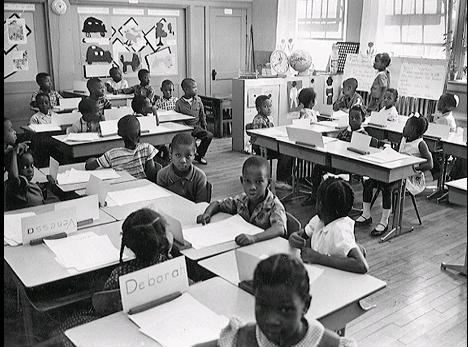
For 10 years Hidden Valley was exclusively white residents, but beginning in the 1970s, Black residents began to move in. The first Black couple to move into the neighborhood were Dr. Raleigh and Thelmetia Bynum. Around this time, the Charlotte-Mecklenburg School district was ordered to desegregate. A result of the Supreme Court’s decision in Swann vs Charlotte-Mecklenburg. Facing the fact that they’ll have to share spaces with Black people, large swaths of whites from across the city began to leave neighborhoods for the suburbs. Coupled with “Urban Renewal” and the destruction of historically Black communities, areas across the city were left less populated and neglected. This destruction of housing in predominantly Black neighborhoods led to many people looking for a new neighborhood, Hidden Valley among them.


Life in Hidden Valley:

Around the same time that the neighborhood’s first Black family moved into Hidden Valley the Hidden Valley Action and Awareness group was created. According to the Hidden Valley Community Association, the Awareness group was made up of “45 women who wanted to strengthen the relationships between black and white neighbors through socials, community improvement project and a monthly newsletter…”. This coincided with the Supreme Court’s decision to force Charlotte Mecklenburg schools to desegregate the district and bus students across the county.

Because of racist attitudes towards Black people, the influx of Black residents into Hidden Valley led to the neighborhood’s white residents to leave in what is known as white flight. White Flight is “the departure of white people from places (such as urban neighborhoods or schools) increasingly or predominantly populated by minorities…” White flight was fueled by ignorance and hate. Another factor pushing this was by banks in the form of redlining and the real estate industry spreading lies that essentially said when Black residents moved into the neighborhood, their presence will cause property values to drop. The federal and local governments played a role in this as well through their policies. Federally, the FHA pushed the idea of the suburbs and subsidized the construction of communities where the main draw was escaping the reality of sharing a space with people of color. These factors each played a role in pulling white residents away from neighborhoods across the county, Hidden Valley included causing a massive drain on neighborhoods and cities economically. This in turn led to a self-fulfilling prophecy where banks and governments would use the results of their efforts to continually ‘Redline’ Black and Minority neighborhoods, locking out any future investments into the neighborhoods and, overtime, diminishing the number of opportunities for its residents.


Sources:

About Us (hiddenvalleyclt.com)

History Before Us - The True American History | Black History

Home Again Foundation - Housing, Nonprofit, Charitable Organization (homeagainclt.org)


Brooks, D. (2021, July 16). Report Confirms Charlotte’s Lack Of Upward Mobility, Offers Priorities. WFAE 90.7 - Charlotte’s NPR News Source. Retrieved October 24, 2021, from https://www.wfae.org/local-news/2020-11-20/report-confirms-charlottes-lack-of-upward-mobility-offers-priorities.

Carter, B. (2012, February 16). Hidden Valley out front in mounting comeback Challenged neighborhood eyes revitalization. The Charlotte Post. Retrieved October 24, 2021, from http://www.thecharlottepost.com/index.php?src=permalinks/Hidden_Valley_out_front_in_mounting_comeback#:~:text=Developed%20in%201959%2C%20Hidden%20Valley,Neighborhood%20Quality%20of%20Life%20Index.

de la Canal, N. (2018, October 15). FAQ City: What Happened To Charlotte’s Earle Village? WFAE 90.7 - Charlotte’s NPR News Source. Retrieved October 24, 2021, from https://www.wfae.org/local-news/2018-10-09/faq-city-what-happened-to-charlottes-earle-village

Graff, M. (2020, January 27). Brookhill: How one of Charlotte’s most complicated and misunderstood developments could end up a success story. Axios Charlotte. Retrieved October 24, 2021, from https://charlotte.axios.com/193571/brookhill-how-one-of-charlottes-most-complicated-and-misunderstood-developments-could-end-up-a-success-story/

Kamin, D. (2020, August 27). Black Homeowners Face Discrimination in Appraisals. The New York Times. Retrieved October 24, 2021, from https://www.nytimes.com/2020/08/25/realestate/blacks-minorities-appraisals-discrimination.html

Vega, T. (2016, August 9). Blacks will take hundreds of years to catch up to white wealth. CNNMoney. Retrieved October 24, 2021, from https://money.cnn.com/2016/08/09/news/economy/blacks-white-wealth-gap/index.html

Wickersham, S. (2019, November 23). Hidden Valley residents continue to improve neighborhood’s reputation. WSOC TV. Retrieved October 24, 2021, from https://www.wsoctv.com/news/9-investigates/hidden-valley-residents-continue-to-improve-neighborhood-s-reputation/822465035/

The Importance of Community Organizing in Black Neighborhoods

Charlotte residents and community leaders Rickey Hall and Ismaail Qaiyim join in for a discussion on the importance of community organizing in Black neighborhoods. As well as highlighting the other issues facing the west-side of Charlotte.

Show Notes:

  1. Housing Justice Coalition Facebook: Housing Justice Coalition CLT | Facebook

  2. West Blvd Neighborhood Coalition: West Blvd NC – Neighborhood Coalition

  3. Biden Administration looks to correct past destruction from Urban Renewal: Here's What's In President Biden's $2 Trillion Infrastructure Proposal | WFAE 90.7 - Charlotte's NPR News Source

  4. Bloomberg - The Paycheck: Pay Check Podcast Episode 4: Wealth Inequities for Black American Home Buyers - Bloomberg

  5. Upward mobility in Charlotte: Report Confirms Charlotte's Lack Of Upward Mobility, Offers Priorities | WFAE 90.7 - Charlotte's NPR News Source

  6. Cost of housing in Charlotte: Affordable housing in Charlotte | wcnc.com

  7. Who is buying Charlotte’s houses: Supply of Charlotte NC homes for sale shrinking rapidly | Charlotte Observer

  8. West Side Community Land Trust – Homepage: Home | West Side Community Land Trust (westsideclt.org)

  9. CATS Silver Line project plan: Projects & Transit Planning > Silver Line (charlottenc.gov)

  10. WBNC Food COOP: Three Sisters Market (@3smclt) • Instagram photos and videos

  11. Charlotte's Unified Development Ordinance (UDO) - (charlotteudo.org)

  12. Charlotte Future Comprehensive Plan Hits Delay as Discussions Continue (qcnerve.com)

Intro Music – The Souse Don by Sam Barsh

Outro Music – Oceanscraper by xJWill


Life Before Jim

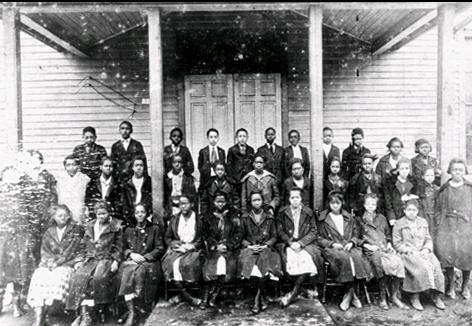
Driven by a desire to improve their lives and the lives of their families, freed slaves had taken up the opportunity to do things that they could have only dreamed of before the war.

Read More

Glancing back at History

There is a slow moving but ever-present trend sweeping across United States. Numerous communities are currently falling victim to something called gentrification. Gentrification can be summed up as the repairing and rebuilding of homes or business in a deteriorating area by more affluent people. Of course, that comes with a cost; the displacement of the community’s prior residents. This can come in different forms, and its causes aren’t always malicious. But it can still have an effect that change a community for generations and the disappearance of a community’s story.

Named after Queen Charlotte of Mecklenburg, the city of now 860,000 was founded in 1768; 5 years after Mecklenburg county. Soon after, the residents of the area played a pivotal role during the American War of Independence declaring the county apart from the British crown years before America itself did. This rebellious streak played a role in giving Charlotte one of its two nicknames; the hornets nest.

I am very excited to get to explore Charlotte, North Carolina and tell the world the stories that may or may not have been forgotten.

In this series I will tell you the stories behind neighborhoods such as, Cherry, Biddleville, Brooklyn, and Belmont.

Meet the past, and current residents of the communities and explore hidden corners that not many people know today.

Over the next few months, I will bring the stories back from the rubble for the next generation.